Keeping Your AWTS Healthy
The simple habits that protect your wastewater system
Your Advanced Secondary Wastewater Treatment System (AWTS) works hard every day, quietly treating the wastewater from your home so it can be safely reused for irrigation. At the heart of the system are millions of beneficial bacteria that naturally break down waste.
The key to a healthy AWTS is surprisingly simple: look after the bacteria, and they'll look after your system.
By making a few smart choices around the home, you can help your system operate efficiently, reduce the risk of unpleasant odours, avoid unnecessary repairs and extend the life of your investment. Using the right AWTS cleaning products helps to protect the beneficial bacteria responsible for treating household wastewater.
Choose your cleaning products carefully
Many people assume that products marketed as eco-friendly, green or labelled as septic-safe cleaning products are automatically suitable for an AWTS. Unfortunately, that's not always the case.
Some products contain natural oils such as eucalyptus or tea tree oil, which are antibacterial and can reduce the effectiveness of the beneficial bacteria your treatment system relies on. Likewise, products containing bleach, disinfectants or strong antibacterial ingredients can upset the biological balance within your system.
Instead, look for products that are:
- Biodegradable
- Low in phosphorus
- Free from antibacterial or disinfectant ingredients
- Non-chlorine based wherever possible
When in doubt, moderation is always best. Stick to the recommended dosage of cleaning and wash products.
Choosing products is often just about trial and error. Your EnviroTas technician will advise on your service report if it appears that incompatible products are affecting the operation and biological condition of your system.
Avoid hydraulic shock loads
Your AWTS is designed to treat wastewater steadily throughout the day.
Running several loads of washing back-to-back, having multiple showers at once, or emptying large baths at the same time can overwhelm the system. Spreading water use more evenly throughout the week gives the treatment process time to work effectively. Even something as simple as fixing leaking taps or constantly running toilets can make a noticeable difference.
Cleaning products and household items to avoid with an AWTS:
Some household products can seriously affect the performance of your treatment system.
Avoid allowing the following to enter your drains:
- Bleach and disinfectants
- Antibacterial cleaning products
- Strong acids, alkalis and caustic cleaners
- Drain cleaners
- Chemical detergents
- Caravan toilet chemicals
- Antibiotics where possible
- Oils and fats, alcohol and dairy products
- Paints, dyes and colourings
- Paper towels, wipes and sanitary products
These products can reduce bacterial activity, create unpleasant odours and interfere with the treatment process.
Sanitary products, wipes, paper towels, and other items that don't break down should not be flushed into your AWTS. These materials can quickly build up inside the system, block pipework, damage pumps and other equipment, and significantly increase the likelihood of needing a pump-out much sooner than expected.
Room-by-Room Tips
Kitchen
- Choose products that are non-toxic, non-chlorine based and biodegradable.
- Liquids are generally better than powder or tablets.
- Dishwashing liquid must not be antibacterial, disinfectant or concentrate.
- Finish Powerball or any other dishwasher tablets/capsules with fancy balls or colours are too strong.
- Finish Powder or other types of basic powders are generally ok, stick to recommended dosage.
- Surface cleaners should be natural based, unless using a disposable wipe which isn’t rinsed down the drains.
- Any cream cleaner such as JIF are generally safe.
- Do not use Draino or other strong drain cleaners.
Bathroom
- Look for environmentally friendly and biodegradable products.
- Most cream cleaners such as JIF are suitable unless in excess quantities.
- Alternative non-chemical cleaning coths are recommended such as Enjo, Norwex etc.
- Koh products are known to work very well with AWTS.
- Bicarb Soda or Vinegar works well as a cleaner.
- Avoid antibacterial, bleach or ammonia-based cleaners.
- Toilet fresheners are not recommended.
- Windex used on shower screens is generally too strong.
- Avoid mould killer products.
- Avoid orange power as it is too strong
Laundry
- Product must be stamped as NP
- No bleaches.
- Look for low phosphorus, low sodium and low sulphur products.
- Avoid stain removal products, particularly prewash spray.
- Rubbing a bar of soap over a stain before washing can be an effective alternative to stain removal sprays or soakers.
- Incompatible soakers (Sard or Napisan) can be used in a bucket and then disposed of appropriately outside (not down the drain) when finished.
- Liquids are generally better than powders
Personal and Pet Care
- Most soaps, shampoos and personal hygiene products are safe when used normally.
- Avoid excessive use of strong antibacterial hand washes.
- Make sure pet wash water—particularly products containing flea treatments—doesn't drain into your AWTS.
Floors
- Nothing antibacterial or disinfectant, unless the water is disposed of outside (not down the drain).
- Vinegar or a mild detergent mixed with hot water works well on floors and is safe for AWTS.
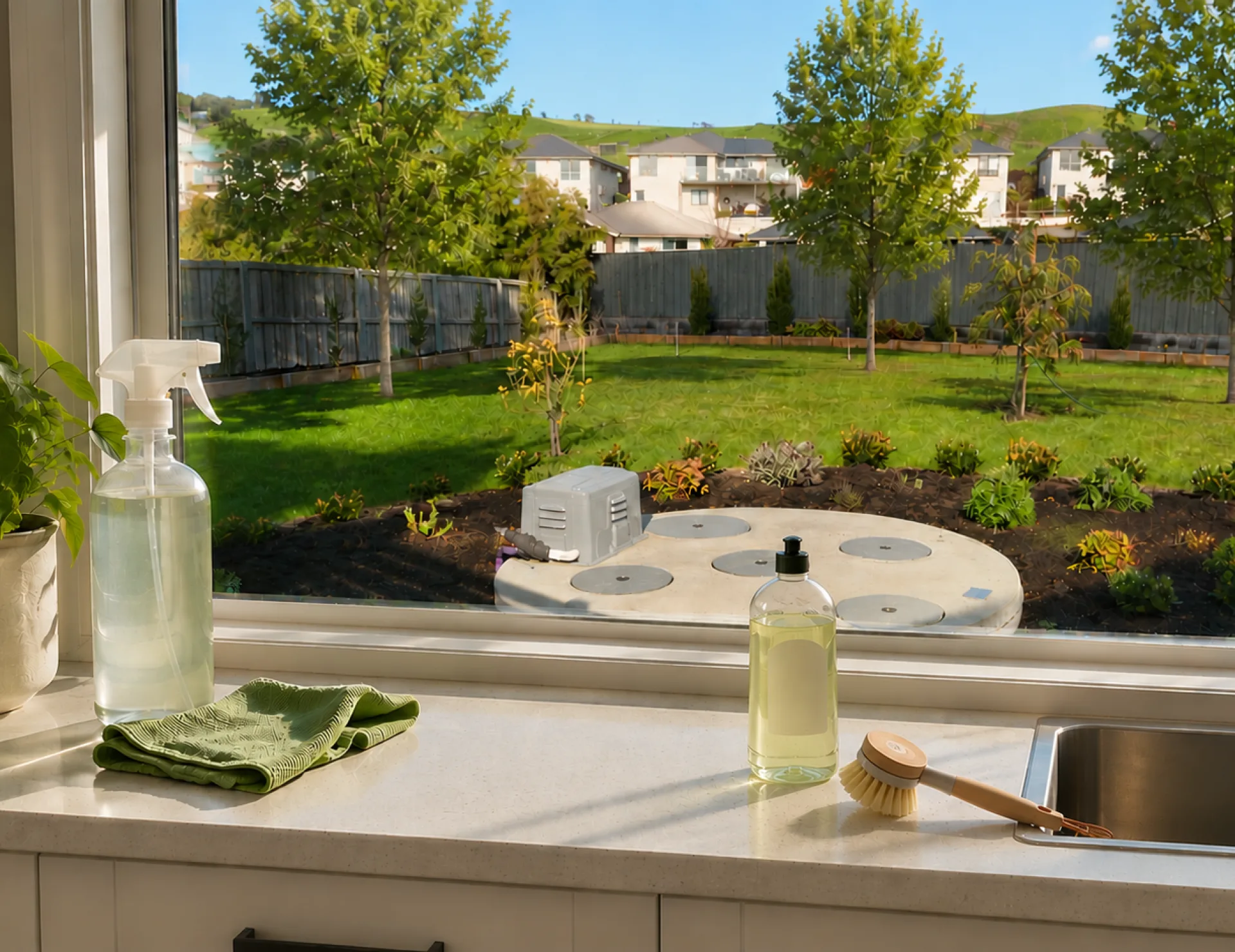
What cleaning products are generally safe for an AWTS?
It's difficult to confidently say which products will be safe for an AWTS as the product ingredients are continually evolving and changing. The examples below are based on products we have generally found to be compatible with EnviroTas AWTS systems:
- Koh cleaning products
- Lucent Globe cleaning range
- Vinegar
- Bicarbonate of soda
- Enzyme-based drain treatments such as Subdu and Actizyme
- Chemical-free cleaning products such as Enjo and Norwex cloths
Moderation is key with all cleaning products. Your AWTS can tolerate a small amount of unsuitable product being used, but to keep the system performing at its best, please stick as closely as possible to EnviroTas recommendations.
What if you need to use a strong cleaner, stain remover or dye your hair?
Occasionally you may need to use a product that isn't suitable for your wastewater treatment system.
Where possible, use it in a bucket and dispose of the wastewater appropriately outdoors rather than pouring it down a drain connected to your AWTS. This simple step can help protect the bacteria that keep your system operating efficiently.
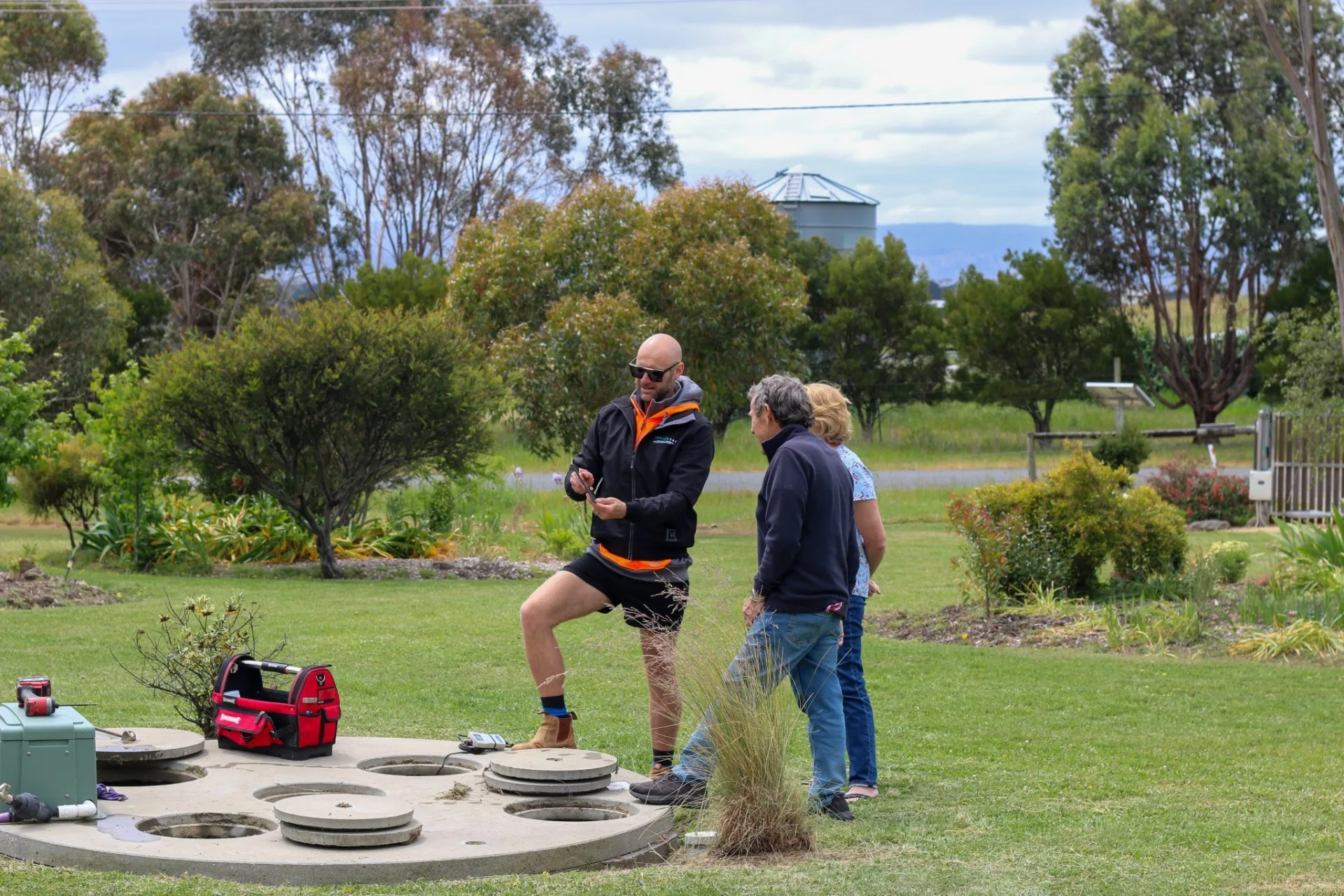
Keep Your System Performing at Its Best
A healthy AWTS doesn't require complicated maintenance—it simply needs the right environment for its natural treatment process to thrive.
By choosing suitable household products, spreading out your water use and avoiding harsh chemicals, you'll help your system continue treating wastewater efficiently for years to come.
If you're ever unsure whether a product is suitable, or your system alarm activates, contact the EnviroTas team.
During your regular service, your technician can also identify whether incompatible products are affecting the biological health of your system and provide practical advice to keep everything running smoothly.